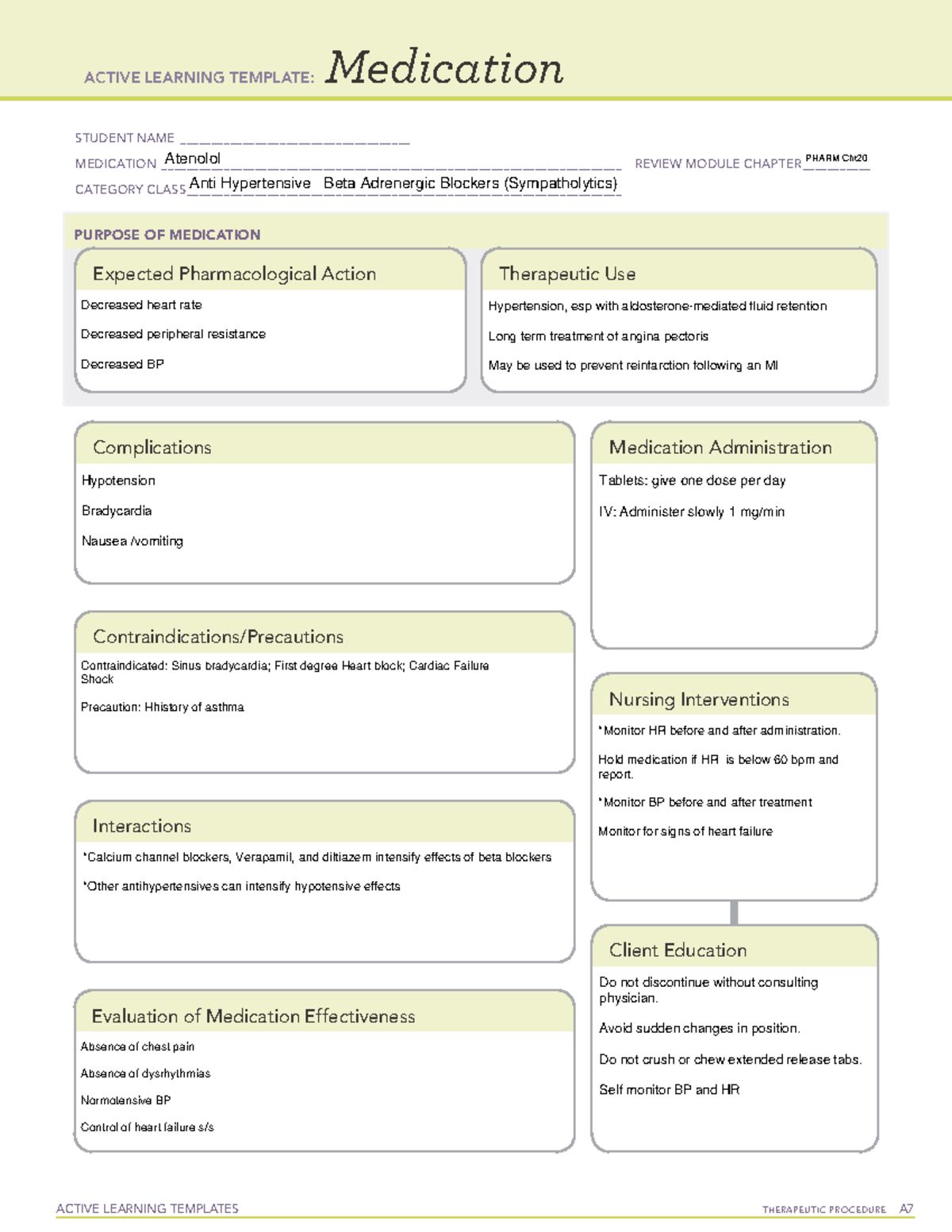
When I first started working with medical documentation, I quickly realized how much time I was spending on repetitive tasks. That’s when I discovered the Ati Med Template, a tool designed to streamline the process. It wasn’t just about saving time—it was about reducing errors and ensuring consistency across patient records. In my experience, this template has become a cornerstone in my workflow, especially during high-pressure shifts where every minute counts.
Why the Ati Med Template Stands Out
What sets the Ati Med Template apart is its adaptability. Unlike generic templates, it’s tailored to medical professionals, incorporating fields for vital signs, medication logs, and progress notes in a single interface. I’ve tested several alternatives, but this one consistently aligns with industry standards like HIPAA compliance, which is non-negotiable in healthcare. Its user-friendly design means even new staff can pick it up quickly, minimizing training time.
Practical Steps to Implement the Template
Customization for Your Needs
The first step is to tailor the template to your specific role or department. For instance, nurses might prioritize medication tracking, while physicians may focus on diagnostic fields. I’ve found that spending 30 minutes upfront to customize the template saves hours in the long run. Tools like Microsoft Word or Google Docs work well for this, though some prefer dedicated software like MedTemplate Pro for advanced features.
Integration with Existing Systems
One challenge I faced was integrating the Ati Med Template with our electronic health record (EHR) system. However, most modern EHRs, such as Epic or Cerner, allow for template imports. It’s crucial to ensure compatibility—I once had to reformat an entire template because I overlooked this step. A quick check with your IT team can prevent this headache.
Real-World Insights and Tradeoffs
While the Ati Med Template is efficient, it’s not without limitations. For example, it doesn’t automatically sync with all EHR systems, requiring manual updates in some cases. Additionally, over-reliance on templates can lead to cookie-cutter documentation, which I’ve seen compromise patient-specific details. That said, with mindful use, it strikes a balance between efficiency and personalization.
| Feature | Ati Med Template | Generic Template |
|---|---|---|
| Customization | High | Low |
| EHR Compatibility | Moderate | Low |
| Compliance | HIPAA-aligned | Varies |
💡 Note: Always double-check template compatibility with your EHR system before full implementation to avoid data inconsistencies.
After months of using the Ati Med Template, I’ve learned that its value lies in how you adapt it to your workflow. It’s not a one-size-fits-all solution, but with thoughtful customization, it becomes an indispensable tool. My advice? Start small—implement it for one task, like daily progress notes, and gradually expand. This approach ensures you harness its benefits without overwhelming your team.
Related Terms:
- ati med template blank
- ati med template pdf
- ati medication template blank pdf
- ati medication template blank
- ati med template acetaminophen
- ati med template lithium